
2026 11 12
Rūta Grušnienė Endowment Enabled a Young Historian to Contribute to the Publication of the Lithuanian Metrica
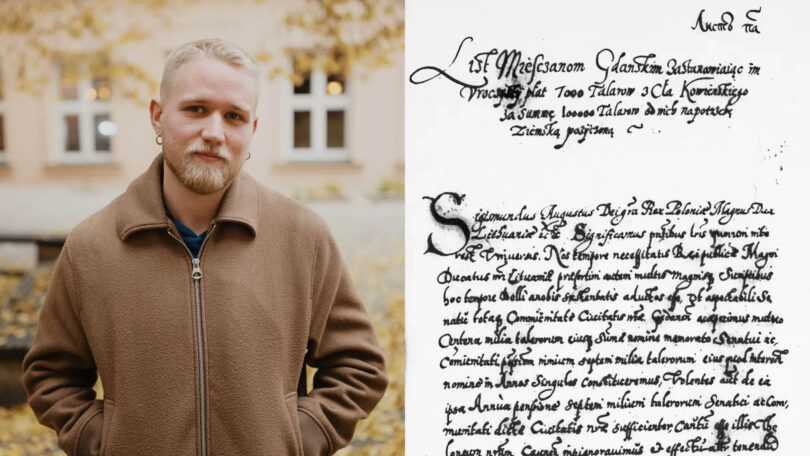
Deciphering 16th-century handwriting, reconstructing Latin texts, and preparing them for other researchers’ work – this was the task that fell to Kristupas Bernotas, a Master’s student at the Vilnius University (VU) Faculty of History. The opportunity to contribute to the publication of the Lithuanian Metrica was provided by the Rūta Grušnienė Sub-fund within the VU Foundation. According to the first-stage researcher, this support gave him a financial boost, helped him acquire new skills, and allowed him to experience first-hand the work of a historian, which demands meticulousness and patience.
A lecturer’s trust encouraged him to take on the challenge
Bernotas became interested in history while still at school, so choosing to study it was a natural step that he took with confidence. During his Bachelor studies, he was drawn to the legal history of the Grand Duchy of Lithuania (GDL), the development of family law, and the influence of Western European legal thought on the GDL’s legal system in the 16th century. He has been exploring these topics since his term paper, and in 2025 he also became the recipient of a named scholarship of the Faculty of History.
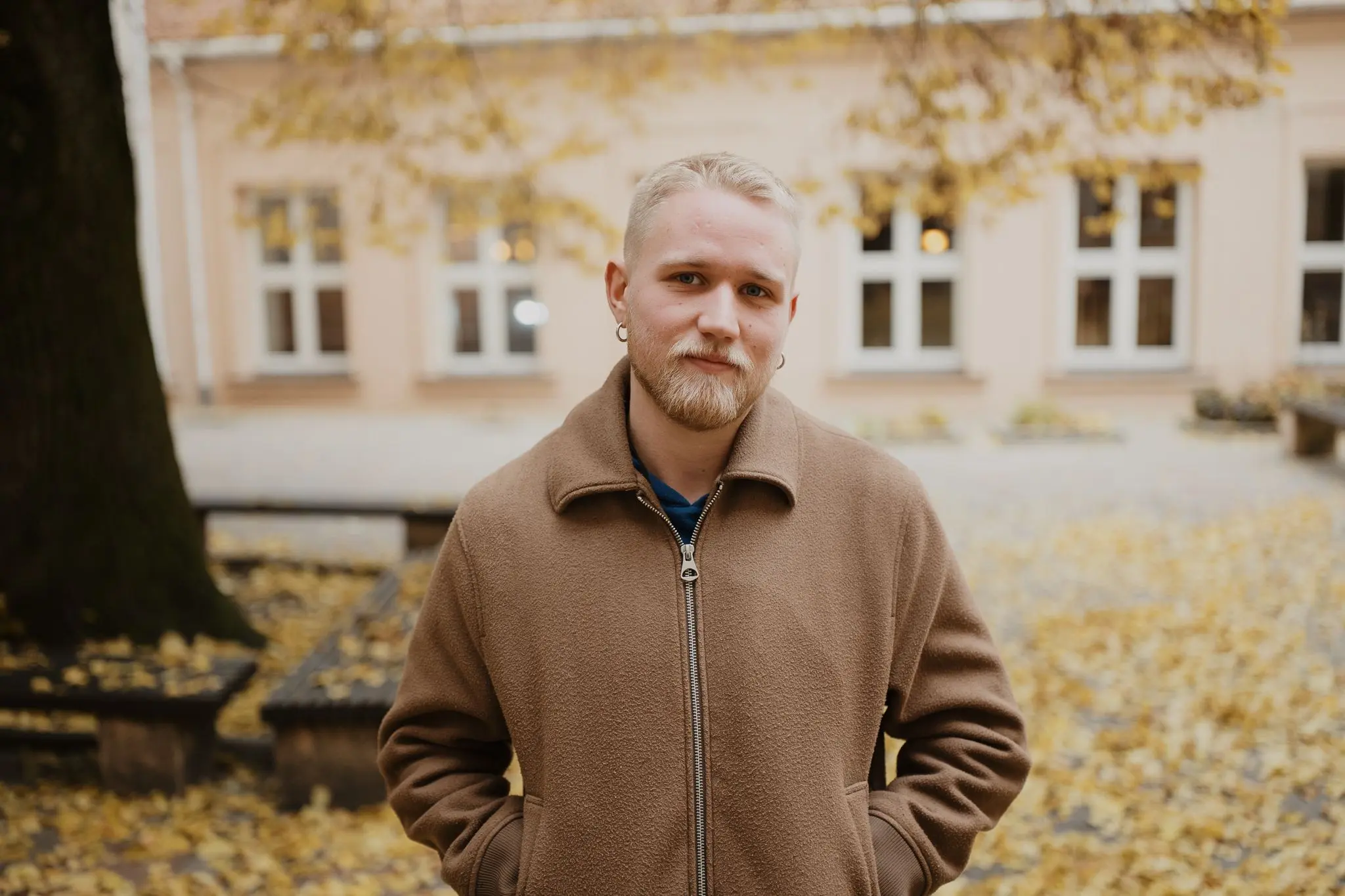
The offer to contribute to the publication of the Lithuanian Metrica came unexpectedly. Assoc. Prof. Liudas Jovaiša, then Head of the Department of Ancient and Medieval History, invited him to a meeting in the summer, during which he suggested that Bernotas try his hand at working with Latin sources. He had heard about Bernotas’s knowledge of Latin from other lecturers.
‘Having heard from other lecturers that I was doing quite well in Latin, he showed confidence in me and encouraged me to take on this challenge. I am extremely grateful to him for this opportunity,’ said the Master’s student.
Learning to decipher the handwriting
Bernotas worked on the Latin texts in Book of Inscriptions No. 44 of the Lithuanian Metrica, which make up about half of its documents. These are privileges granted by Sigismund II Augustus in the 1560s and records of grants of various estates and their inhabitants to nobles as rewards for military service in the Livonian War. He had to reconstruct and transcribe the texts so that they would be suitable for publication and available for use in other researchers’ work.
Although Bernotas had taken courses in Latin and palaeography during his studies, starting to work with a large body of documents was daunting. Transcribing the first document took several hours – first, he had to become familiar with the handwriting of the scribe, a GDL chancery clerk. Over time the work became smoother, and he no longer had to stop every time he encountered a new word.
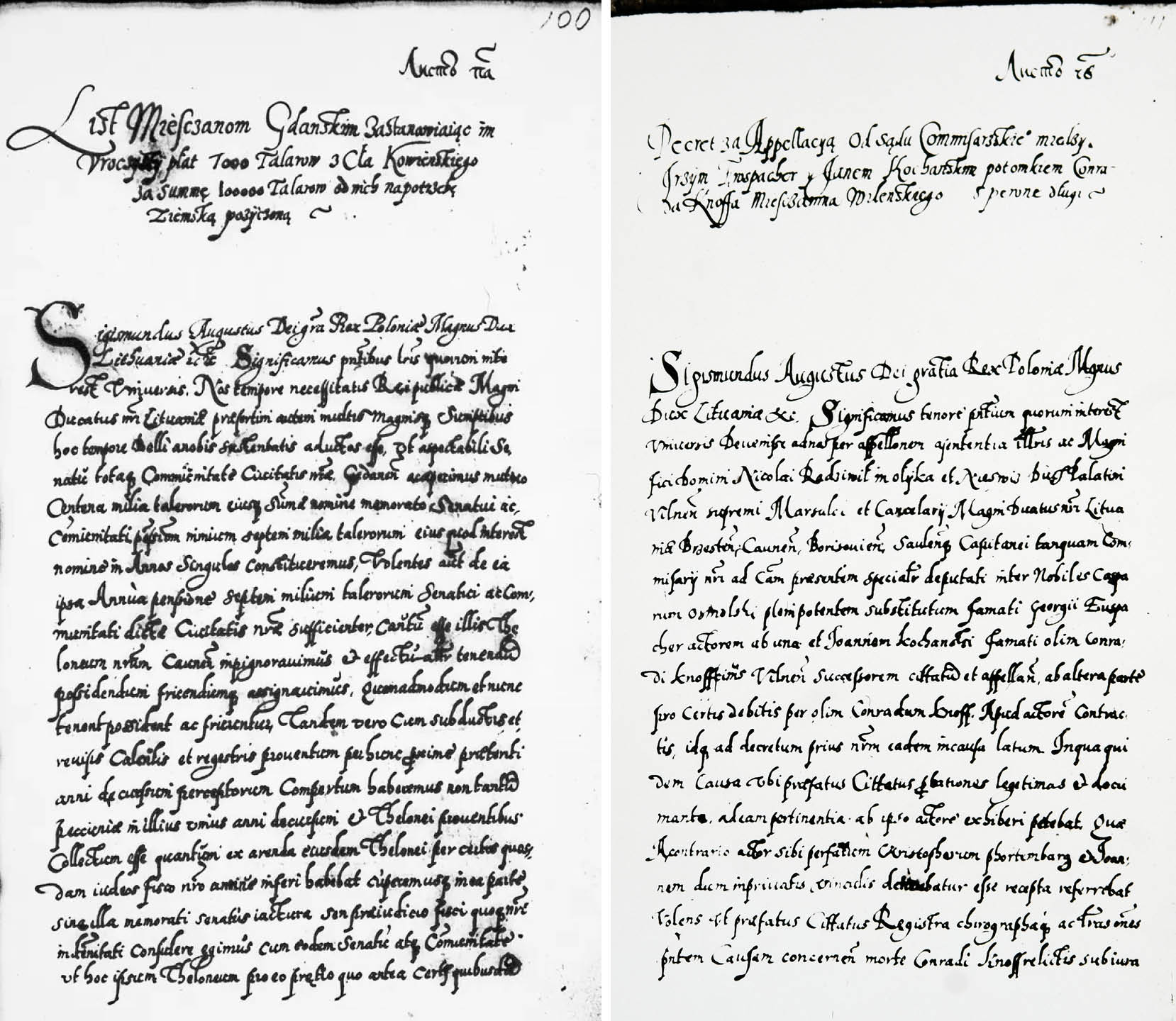
‘I have to say that this work requires enormous patience until you get used to the style of writing the letters, the omissions, and so on. Only then can you start to work steadily, without stopping at every new word. Luckily, all my texts seem to have been written by the same scribe, which made the work considerably easier and faster,’ said Bernotas.
The Master’s student admitted that when transcribing documents, especially under time pressure, copying the text demands the most focus, leaving little opportunity to examine the content in depth. Although he did not single out a specific memorable document, he was intrigued by the places of issue given in the documents’ dating clauses, which made it possible to follow the travels of Sigismund II Augustus. Out of curiosity, Bernotas noted down where the ruler was on each day and thereby managed to put together a fairly busy itinerary of his journeys.
Support that opens the way to research
The opportunity to get involved in source publication was provided by funding from the Rūta Grušnienė Sub-fund within the VU Foundation. For Bernotas, paid work in the field of history meant a chance to apply knowledge from his studies in practice, acquire new skills, and challenge himself as a first-stage researcher. In his words, this experience was significant both financially and as encouragement to take his first professional steps.
‘It gave me, as a first-stage researcher, a huge boost, both mentally and financially, to look at my profession from a different angle, to acquire new skills, and to test my abilities in a very specific field of historical research – the publication of sources. I think such initiatives must be supported and continued in the future,’ he said.
While working, Bernotas deepened his knowledge of the Latin-language written records of the GDL, became acquainted with the subtleties of source publication, learned to plan independent work, and developed patience. At the same time, this experience helped him better understand the efforts of fellow historians preparing source publications that other researchers later use.
‘It allowed me to appreciate more fully the difficult and meticulous work that fellow historians do in preparing source publications for other researchers. Unfortunately, we sometimes fail to appreciate it. I would really like to continue working in the field of source publication. If the opportunity arises, I will certainly welcome it,’ said Bernotas.
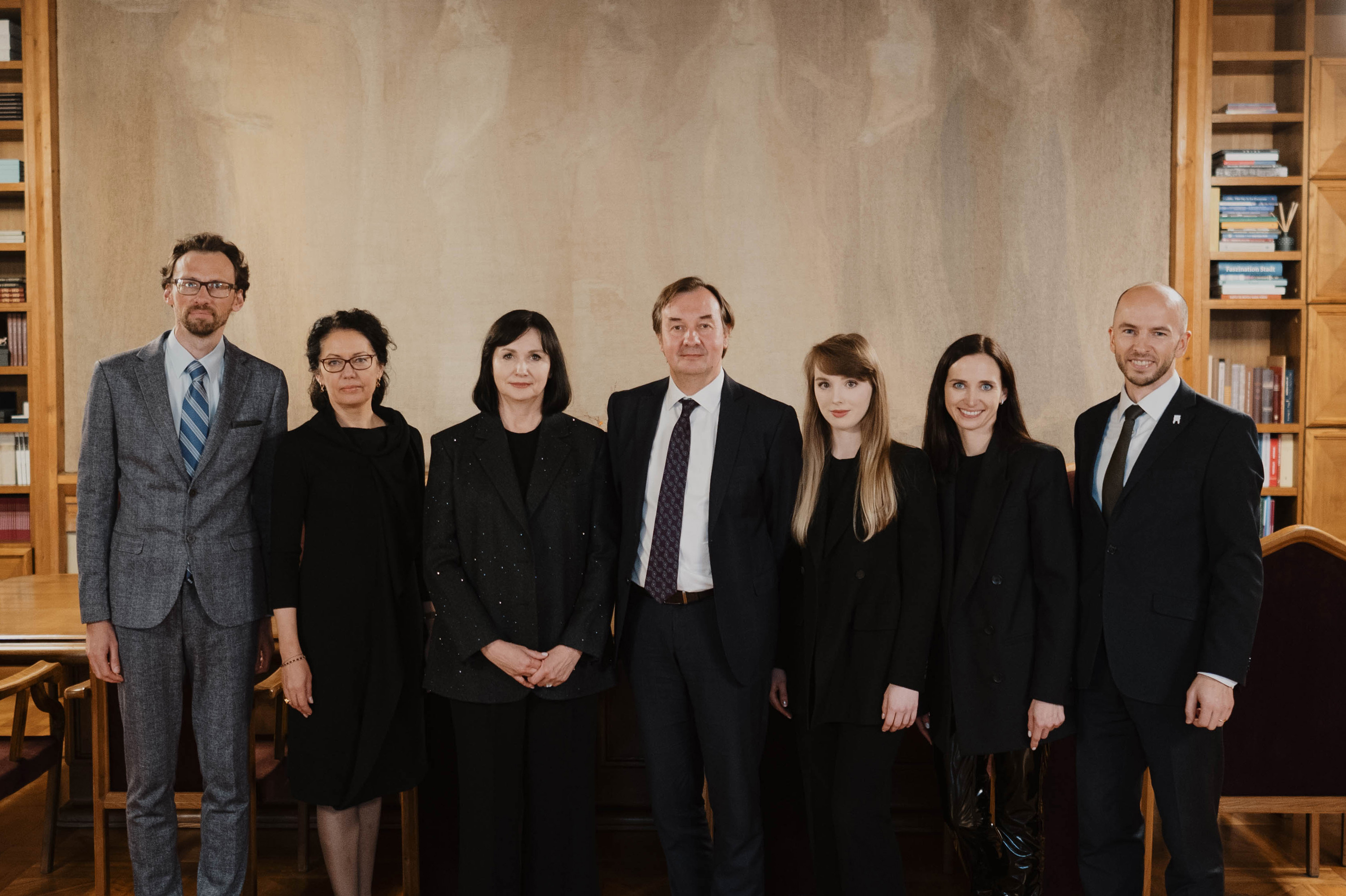
In 2024, entrepreneur Rūta Grušnienė, an alumna of the VU Faculty of Philology, helped to strengthen the Department of Ancient and Medieval History of the VU Faculty of History. Most of the donation was used to establish an endowment sub-fund in the patron’s name at the VU Foundation, with the investment returns supporting the department’s activities and initiatives. The remaining part of the donation was put to use immediately.
More news
2026 11 16
Swedbank and Alter Domus Presented with Patron’s Badges for Exceptional Support to Vilnius University
See more
2026 10 07
At a Solemn VU Senate Meeting, the Vizbaras Brothers Were Awarded the Title of VU Patron
See more
2026 10 02
Milestone for Prof. Jonas Kazlauskas Award: Fund Doubles as Latest Winner Announced
See more
2026 09 09
In memoriam. Juozas Sidas Sidzikauskas (1947–2026)
See more